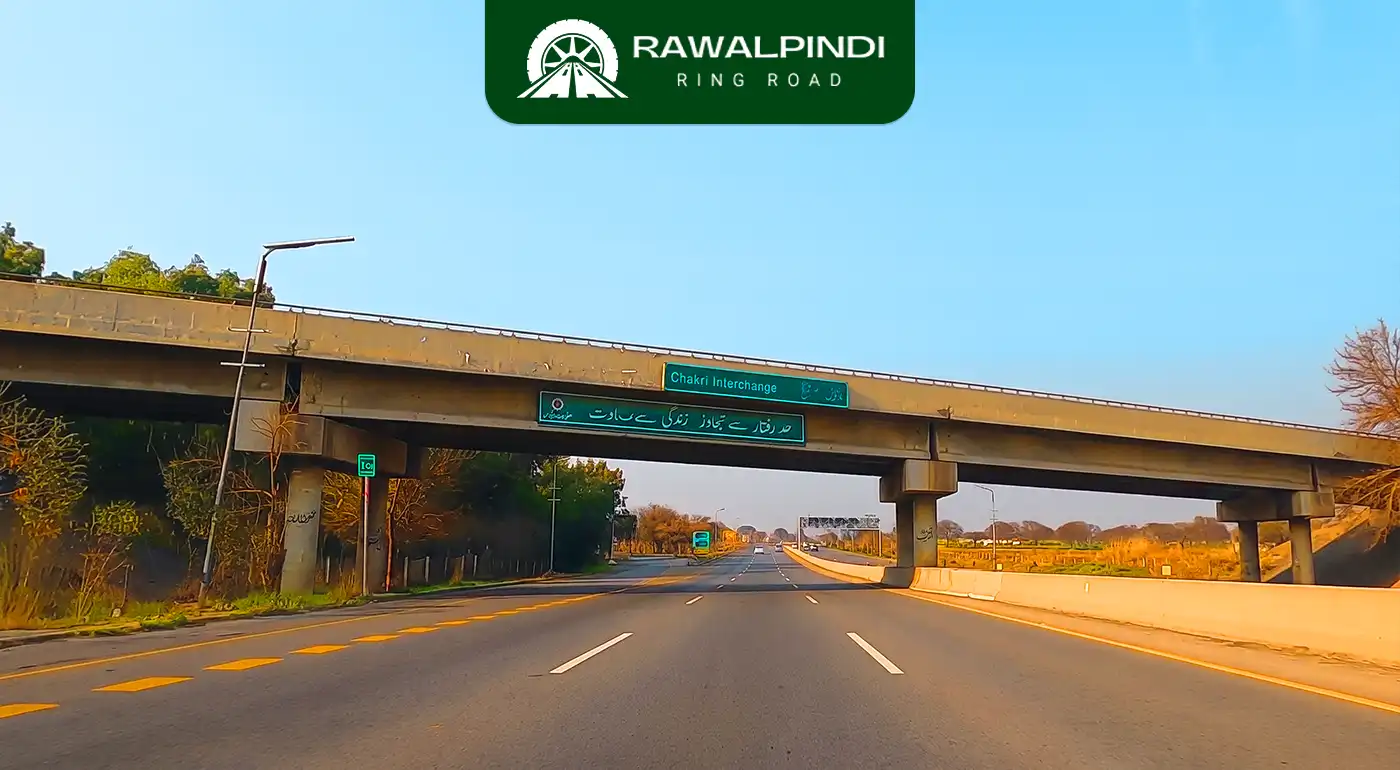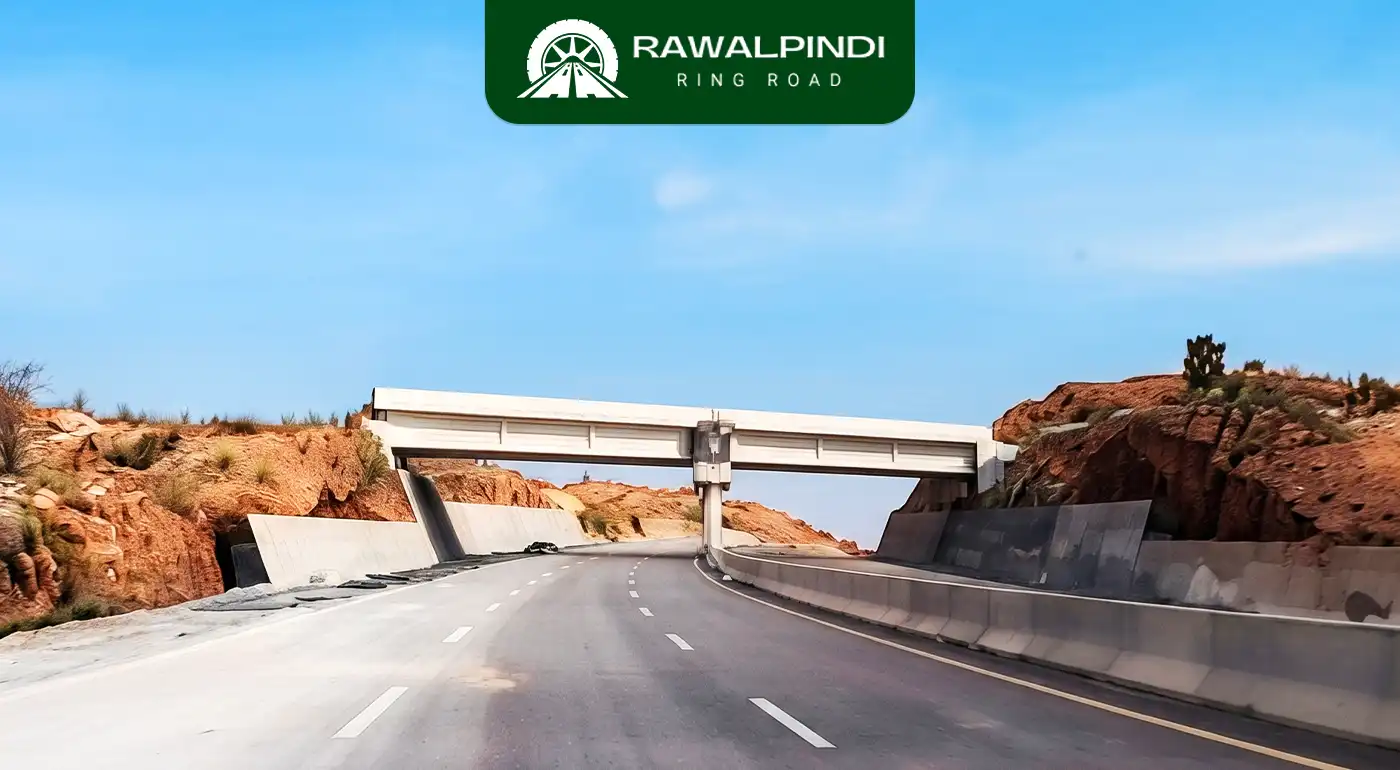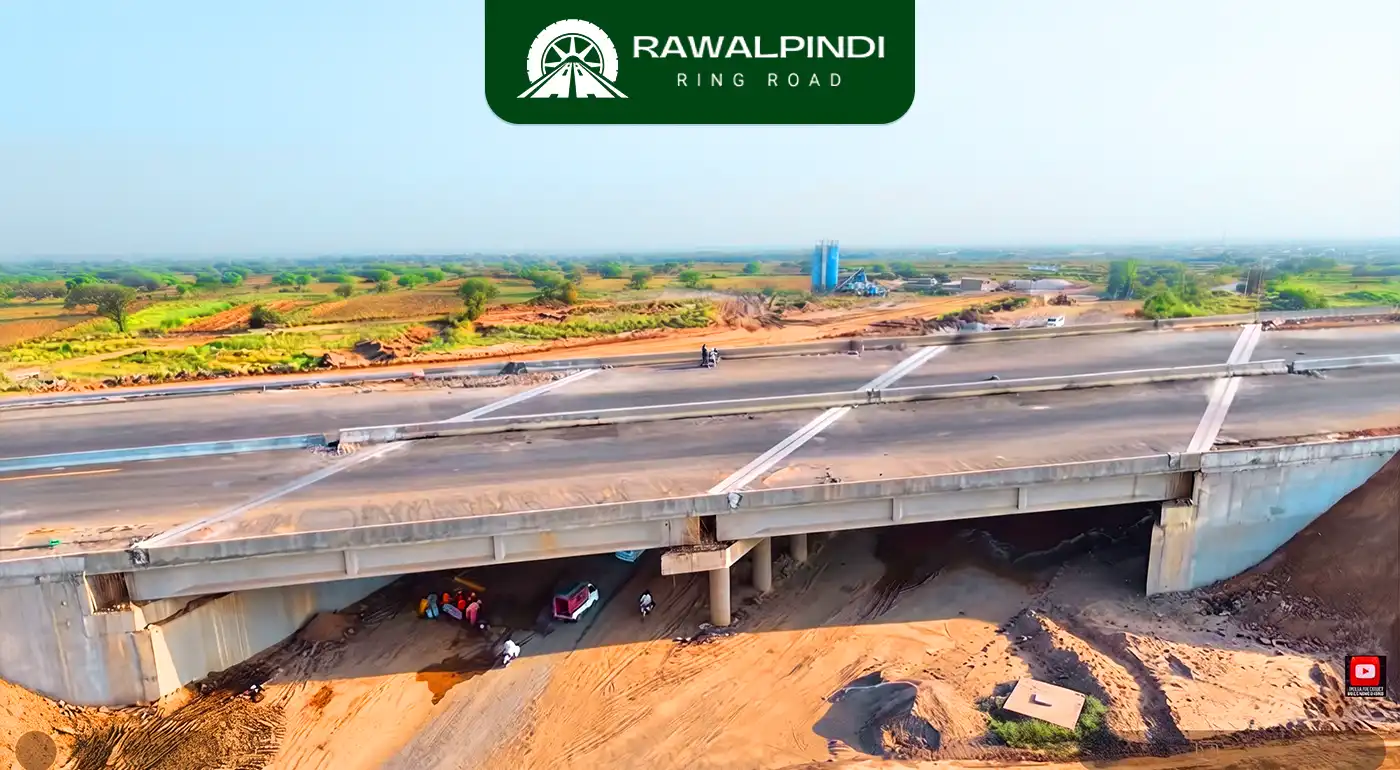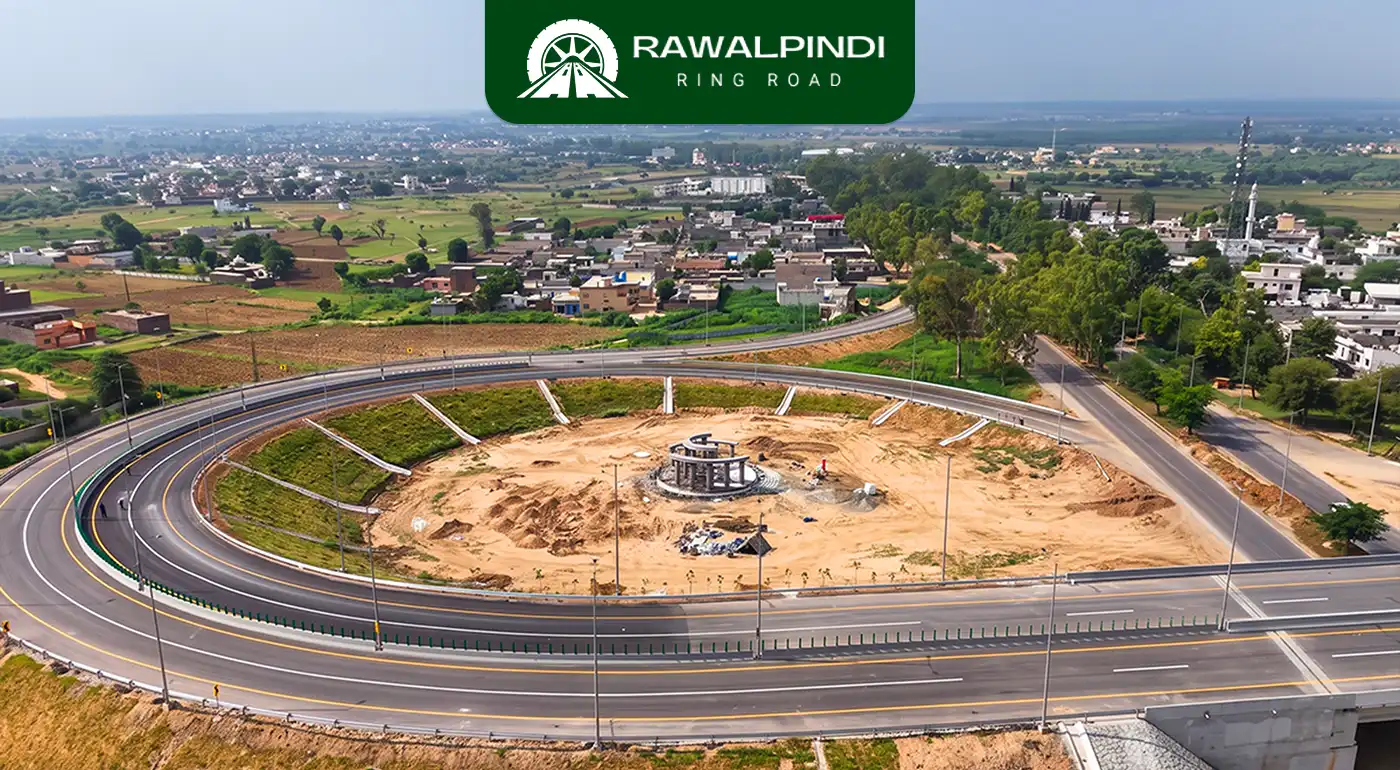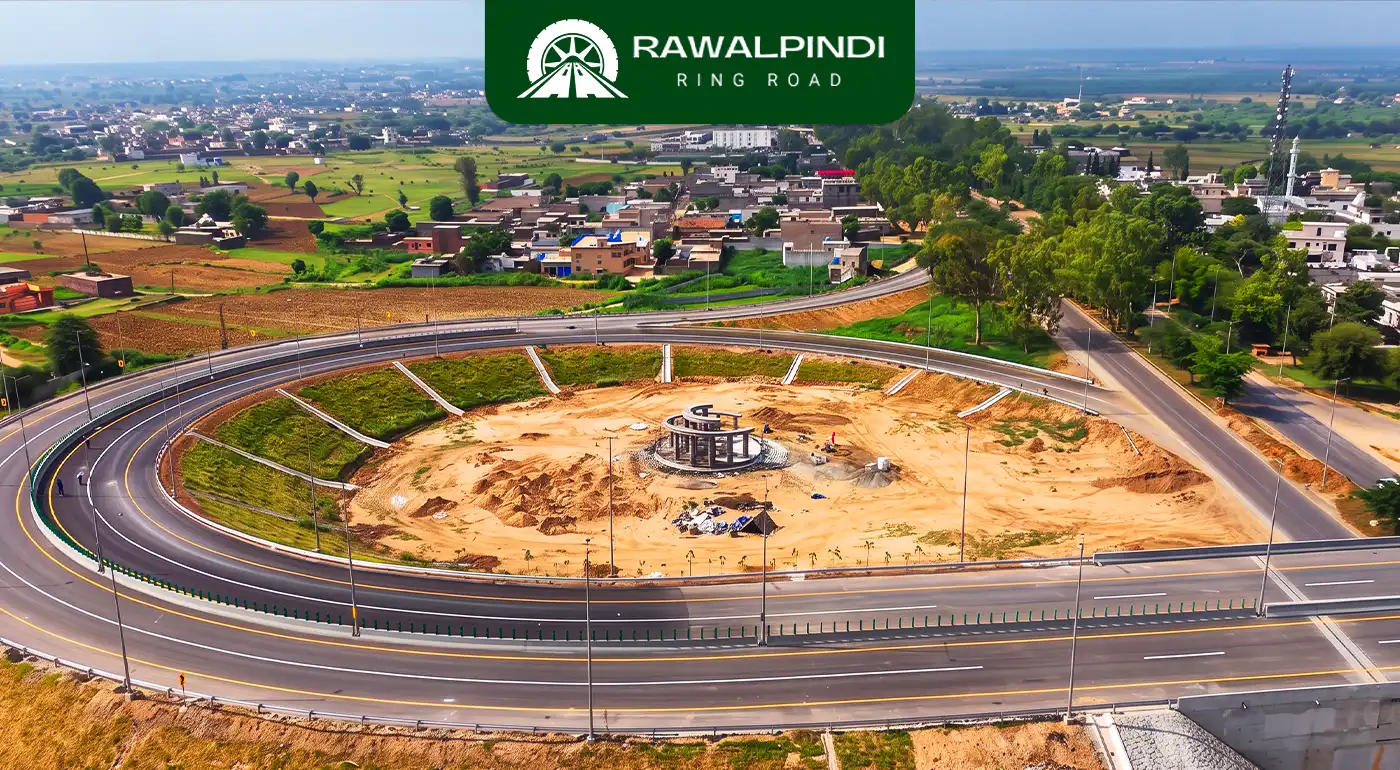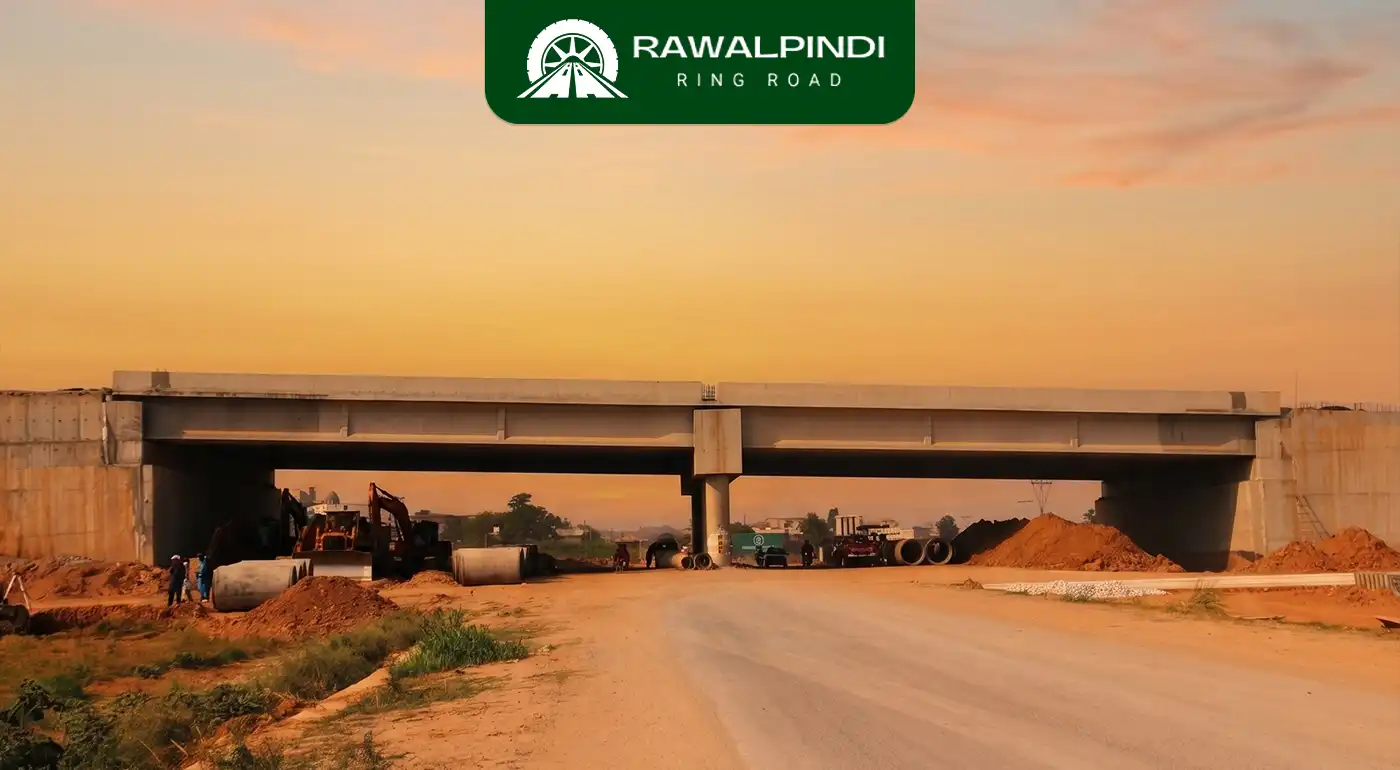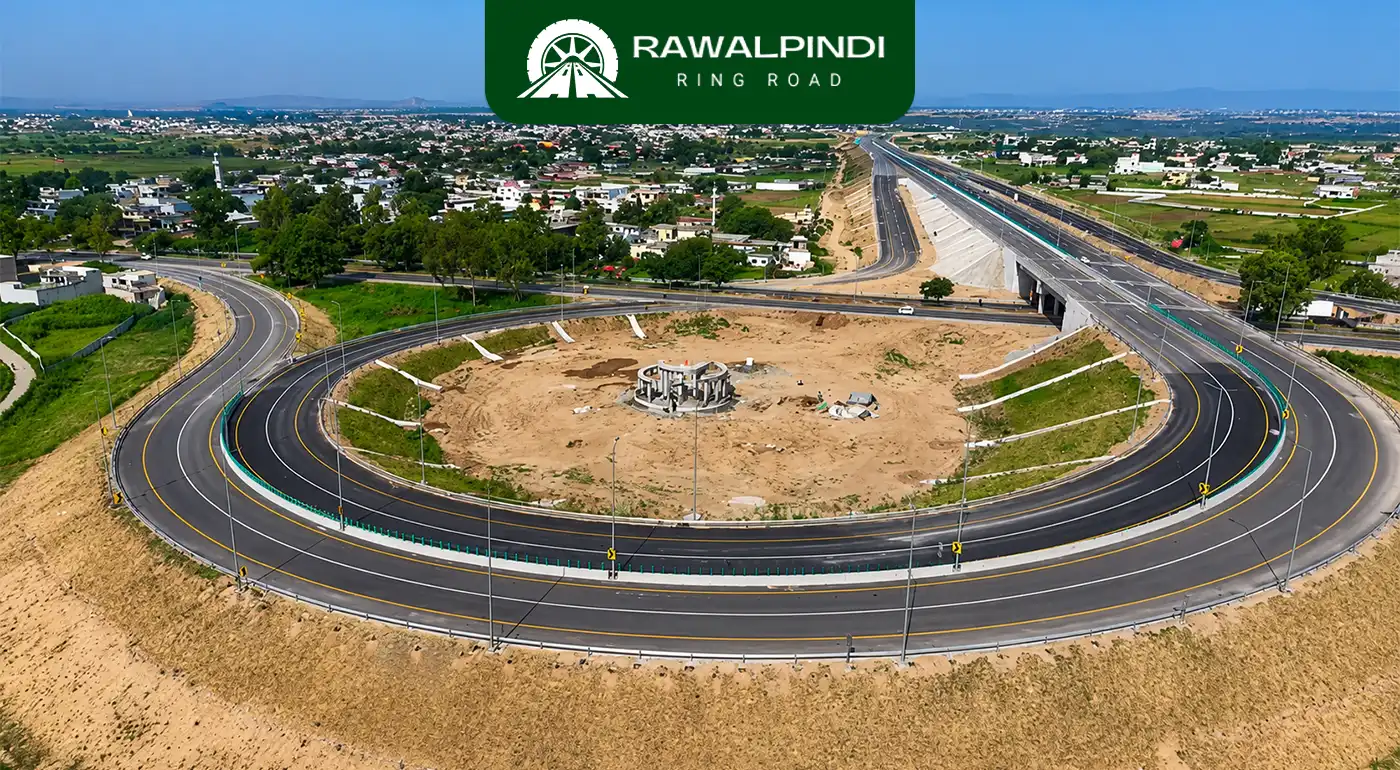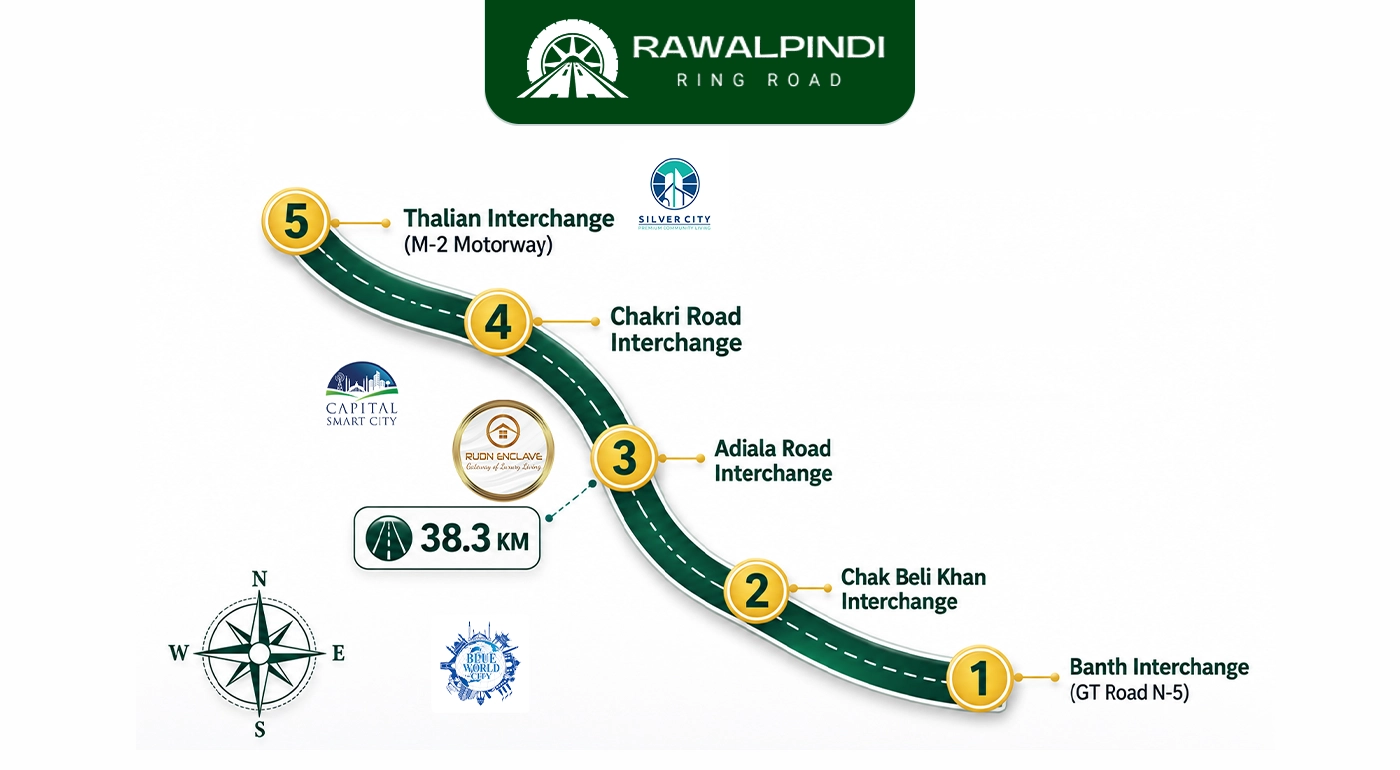

The Thalian Interchange is the fifth and final interchange on the Rawalpindi Ring Road. It’s the western terminus where the 38.6-kilometre expressway is designed to connect with the Lahore–Islamabad Motorway (M-2) and provide access toward the New Islamabad International Airport. Of all five interchanges on the Ring Road, Thalian is both the most consequential in terms of the Ring Road’s national connectivity and the only one that is not operational. It has been formally deferred to Phase II of the project with its own separate budget, its own executing agency, and its own construction timeline extending to 2029.
What the Thalian Interchange Is Designed to Do
The Thalian Interchange was designed as a full grade-separated motorway interchange, the kind of multi-level structure with dedicated slip roads for each direction of travel that allows high-speed traffic to merge onto and exit from the M-2 Motorway without crossing or stopping. In traffic engineering terms, this is what transforms the Ring Road from a city bypass into a component of Pakistan’s national highway network.
Without a proper interchange, the Rawalpindi Ring Road connects to the M-2 at Thalian through what is essentially a road-level junction. The current Thalian location already has an existing connection, the Girja Road local access road meets the motorway here. But Girja Road is a local road, not a motorway-grade facility, and the volume of traffic expected from the Ring Road officials estimate more than 18,000 vehicles per day merging onto the motorway from the Ring Road requires a full interchange, not a local road junction.
Why Thalian Was Deferred – The Official Reasons
The Punjab government confirmed the deferral of the Thalian Interchange to Phase II through multiple official statements in April and May 2026. The Deputy Project Director of the Rawalpindi Ring Road, Ashfaq Sulheri, stated publicly that the Rs 5 billion Thalian interchange project would not begin immediately due to pending issues and would instead be taken up after the main road became operational.
Officials from Punjab’s Communications and Works Department cited two specific technical reasons for the delay, land acquisition issues for the redesigned interchange footprint, and a redesign of the bridges at the interchange to accommodate high-speed rail. The redesign expanded the land requirement from the originally allocated 557 kanals to 915 kanals requiring an additional 358 kanals to be acquired under Section 4 of the Land Acquisition Act. This redesign process, combined with the administrative timeline for land acquisition and Section 4 proceedings, pushed the interchange beyond the Ring Road’s main corridor completion date.
The PC-1 and Phase II Approval
The PC-1 (Planning Commission Proforma-1) for the Thalian Interchange, estimated at Rs 4.8 billion, was approved by the competent authority before mid-June 2026. This is the formal planning approval required before construction funding can be released. The interchange will be constructed under the supervision of the National Highway Authority (NHA) rather than the Frontier Works Organisation (FWO), which built the main Ring Road corridor. A two-lane motorway link road beyond the Thalian Interchange is also part of the NHA’s scope in Phase II.
The combined budget for the Rawalpindi Ring Road including the Thalian Interchange is Rs 51.4 billion of which the Rs 4.8 billion Thalian PC-1 is a distinct, separately approved component. The funds for the additional land acquisition required for the interchange are already available within the overall project budget.
The Interim Motorway Connection
Because the full interchange was deferred, the Punjab government needed an interim arrangement to provide some level of motorway access when the Ring Road opened. That arrangement involves widening existing lanes on two sections of the motorway network. Approximately 23.23 kilometres of additional lanes, two on each side are being added. One section running along the M-2 from the Thalian junction to the M-2 Toll Plaza, and another section along the M-1 from the Islamabad Interchange to the AWT Interchange. A link road connecting the Ring Road at Chungi No. 26 junction is also part of the interim plan.
However, this widening programme has hit its own delay. The PC-1 for the M-1, M-2, and link road widening estimated at Rs 16.97 billion was submitted to the relevant federal ministry but returned because it had not been included in the Public Sector Development Programme (PSDP) for 2025–26.
What Happened When the Road Opened Without Thalian
When the Rawalpindi Ring Road was partially opened in April 2026, the response from the heavy transport sector was immediate and sharp. Heavy transport vehicle (HTV) owners blocked the Ring Road’s entry points in protest, describing the project as a “road to nowhere” for the cargo industry without a functional motorway connection. Transporters argued that without the Thalian link, perishable goods supply chains were disrupted because the Ring Road did not connect to the national highway network they relied on for freight movement. The district administration entered talks with protest leaders, but no concrete construction timeline for the Thalian interchange was provided at that stage, leaving the transport sector’s concerns unresolved at the time of opening.
What Thalian’s Completion Will Actually Change
The difference between the Ring Road with and without the Thalian Interchange is the difference between a city bypass and a national connectivity upgrade.
With a functional Thalian interchange, heavy transport vehicles will have a direct, grade-separated connection from the Ring Road to the M-2 Motorway enabling freight movement from Rawalpindi’s logistics belt to Lahore, Islamabad, and the broader national highway network without city-level routing.
Airport access becomes seamless. The New Islamabad International Airport, approximately 15 to 20 minutes from Thalian via the motorway, becomes directly reachable from any Ring Road entry point without using Islamabad’s internal road network.
The Ring Road’s toll structure becomes fully operational. One of the two planned toll plazas at Thalian cannot be properly operated at a local road junction. A full interchange is required for the toll to function as designed.
Long-haul transit traffic, which currently must either use the full motorway or navigate through Rawalpindi, gets a direct bypass route: enter from GT Road at Banth, cross the Ring Road, exit at Thalian onto M-2, continue to Lahore or Islamabad.
Current Status Summary
PC-1 approved: Rs 4.8 billion (confirmed May 2026).
Executing agency: National Highway Authority (NHA).
Additional land acquisition: 358 kanals under Section 4, initiated by Rawalpindi divisional administration in early 2026.
Motorway widening PC-1 (Rs 16.97 billion): returned by federal ministry for PSDP inclusion with revised completion target March 2029.
Bridge redesign for high-speed rail accommodation: in progress.
Full interchange operational: no earlier than 2028–2029 based on current timelines.
Conclusion
The Thalian Interchange is unfinished, but it is not forgotten. The Rs 4.8 billion PC-1 is approved, the land acquisition is underway, and the NHA has been assigned as the executing agency. What it represents is the difference between a city bypass and a national infrastructure upgrade, between a road that solves Rawalpindi’s congestion problem and one that also connects the region to Pakistan’s full motorway network. Until Thalian is operational, the Ring Road does most of what it was built to do. Once it is, the corridor becomes something larger, a direct, uninterrupted connection from GT Road to the M-2 Motorway, with the New Islamabad International Airport sitting 15 minutes beyond the western end. That is what the Thalian Interchange is worth waiting for.