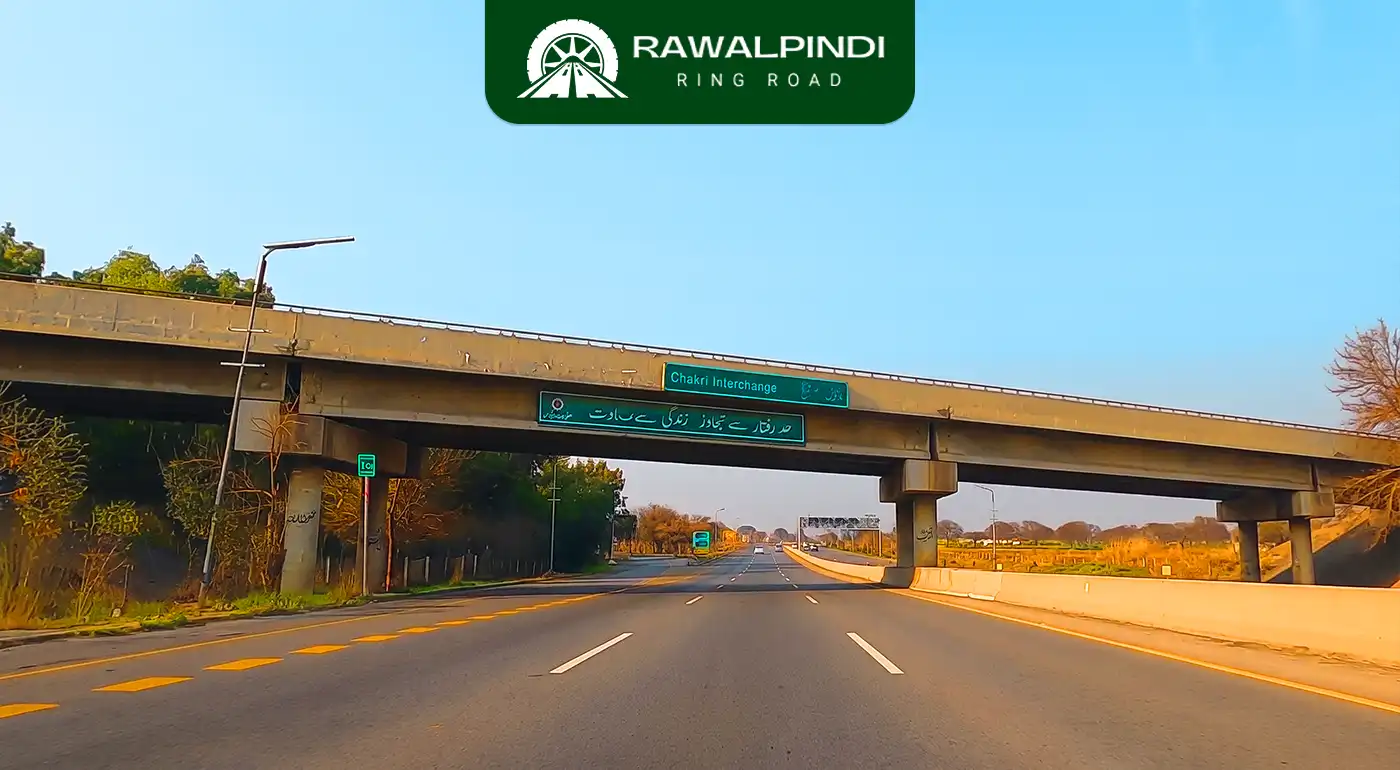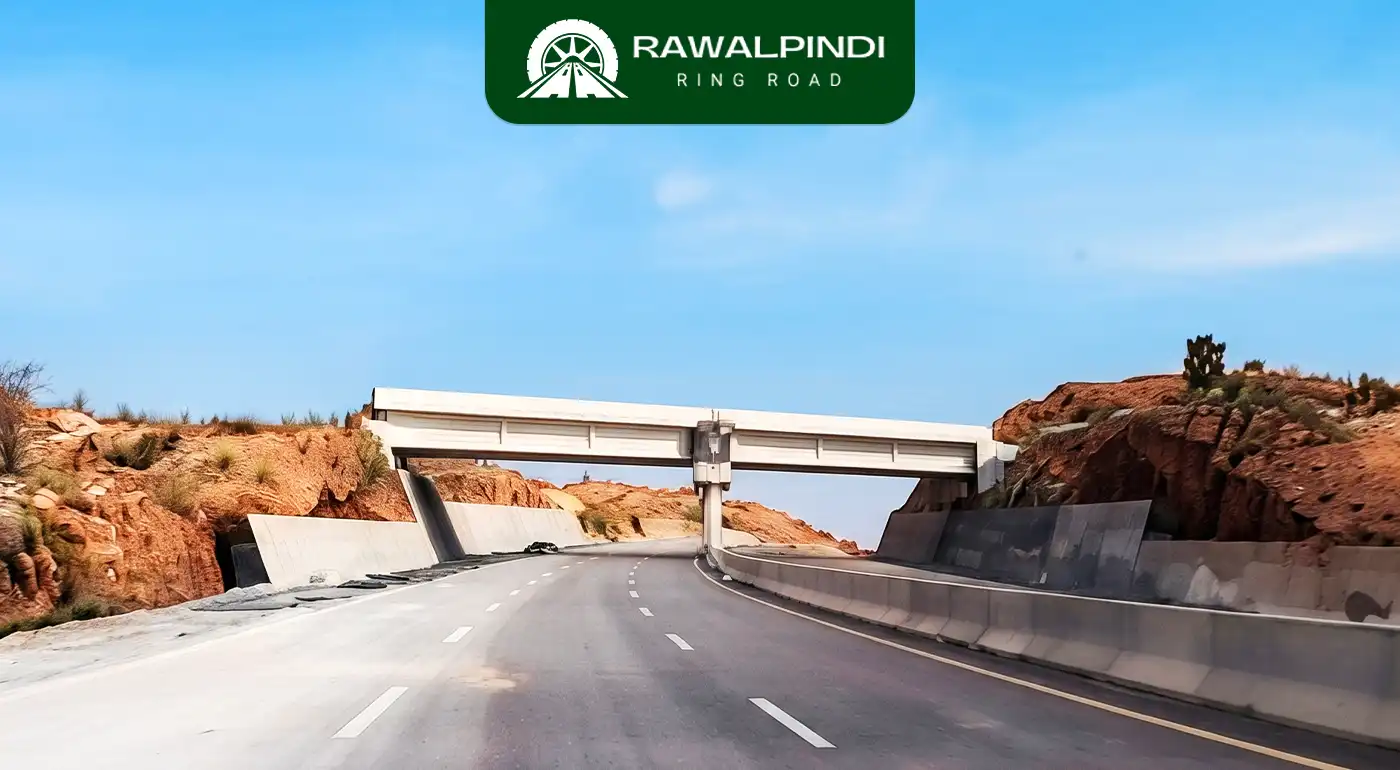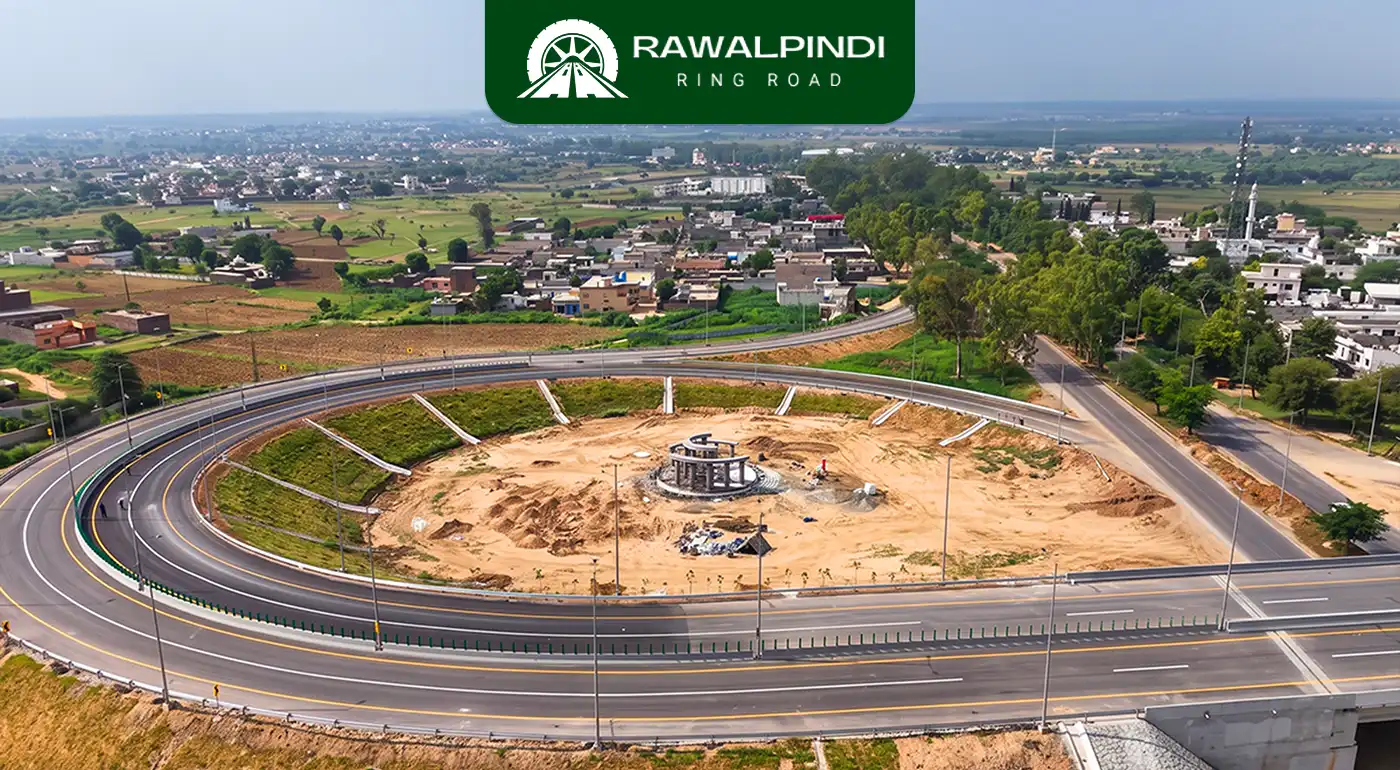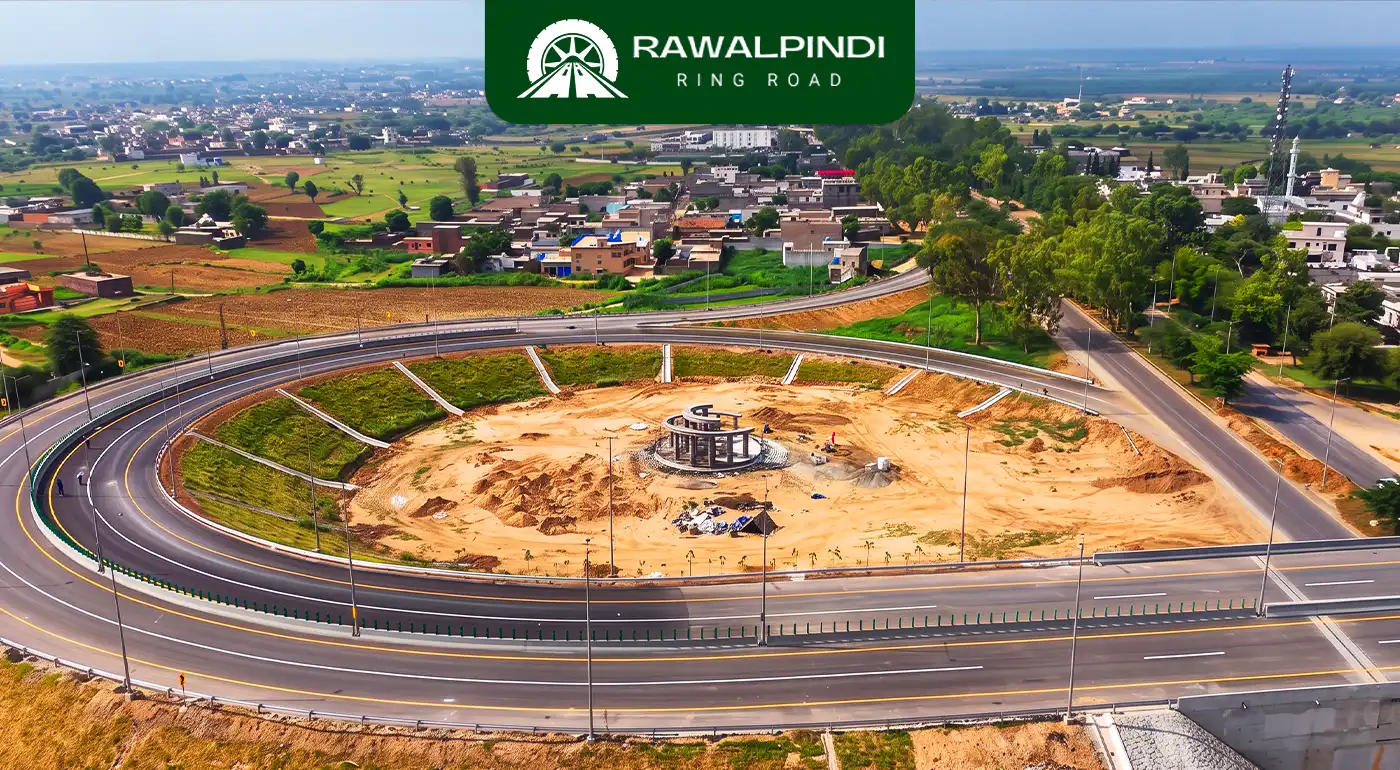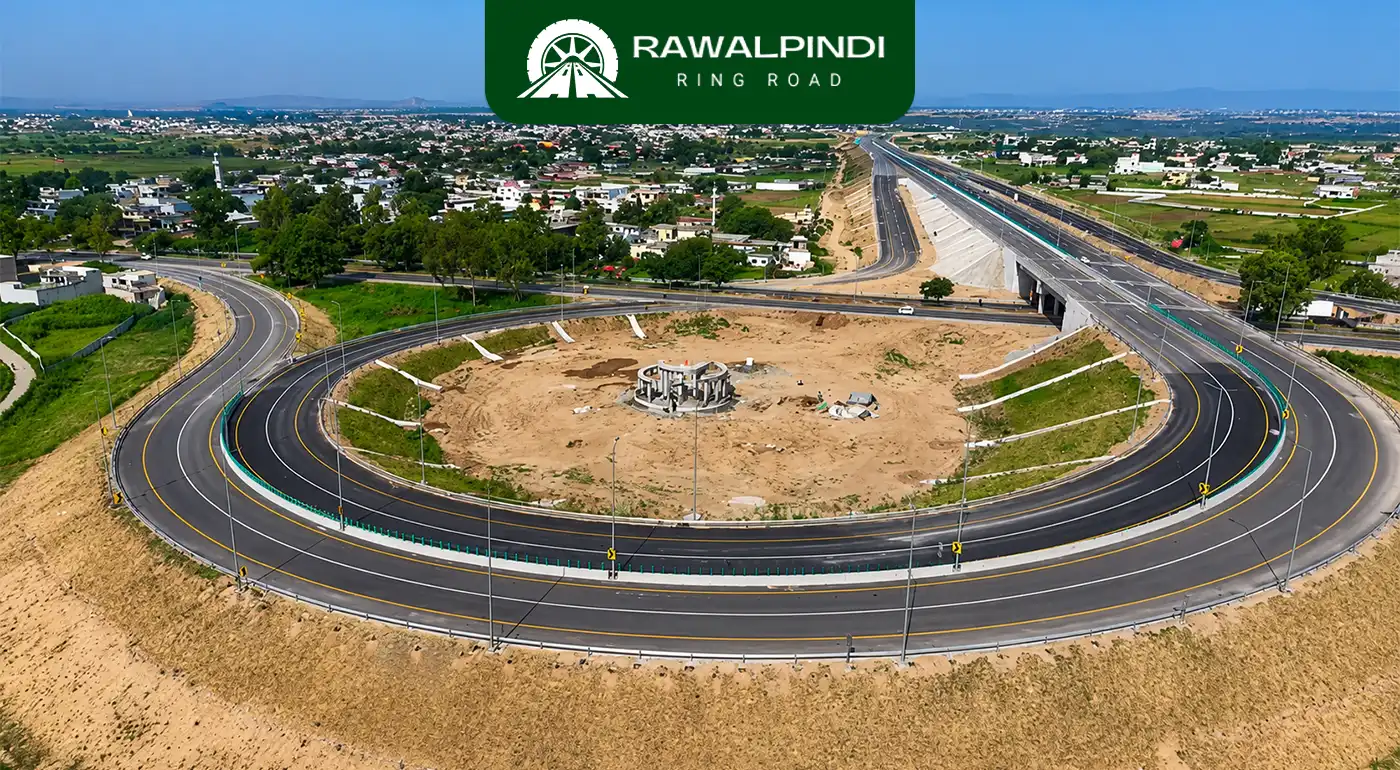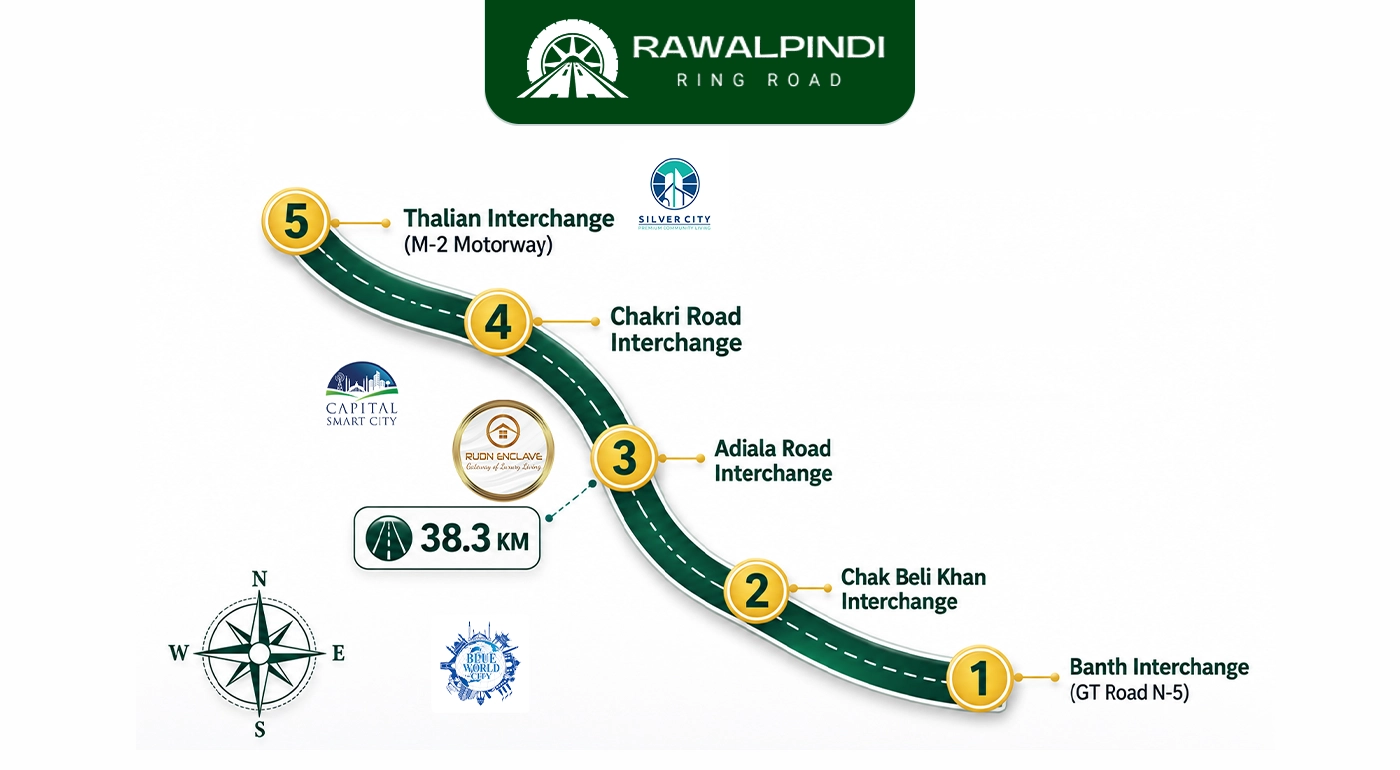
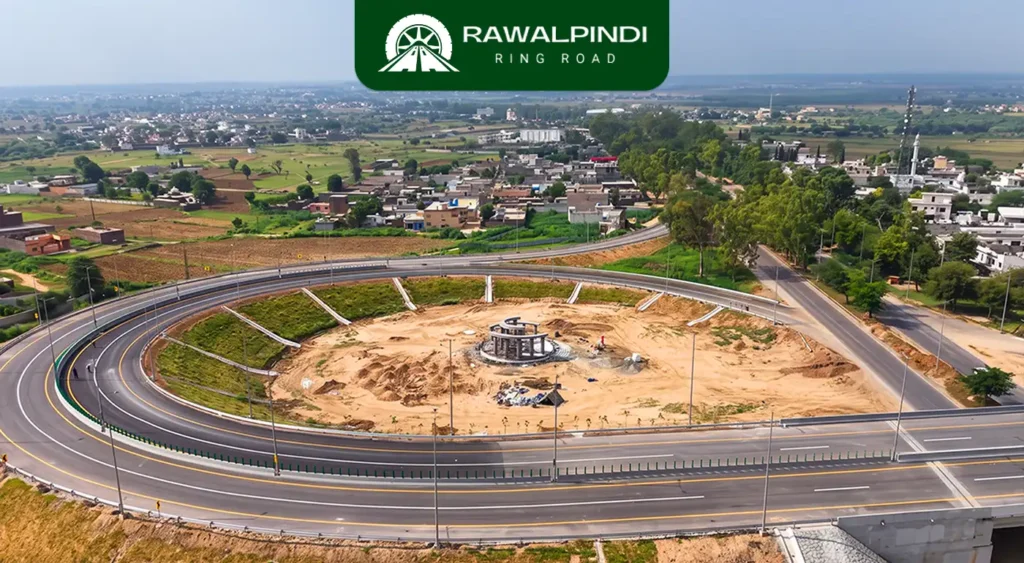
The Banth Interchange, locally known as Banth Mor, is the eastern starting point of the Rawalpindi Ring Road (RRR). It is on the Grand Trunk Road, officially National Highway 5 (N-5), approximately 5 to 6 kilometres from Rawat when heading toward Gujar Khan. This is where the 38.6-kilometre, six-lane, controlled-access expressway officially begins, pulling traffic off the GT Road and directing it westward across the Potohar Plateau toward the Thalian Interchange and M-2 Motorway.
Of all five interchanges on the Ring Road, Banth is the one most directly tied to the original purpose of the project of reducing GT Road traffic through Rawalpindi city. Every journey on the Ring Road from the eastern side starts and ends here.
The Traffic Problem Banth Interchange Was Built to Solve
GT Road through Rawalpindi is one of the most congested stretches of road in Pakistan’s national highway network. The twin cities of Rawalpindi and Islamabad form the third-largest metropolitan area in the country, and N-5 is the primary artery connecting them to the rest of Punjab, Khyber Pakhtunkhwa, and Azad Kashmir. An estimated 80,000 vehicles use this stretch every day, a figure that includes not just local commuters but long-haul trucks, intercity buses, agricultural vehicles from Potohar, and transit traffic heading to the motorway or airport without any business inside the city at all.
Before the Ring Road, every single one of those vehicles had the same choice, pass through Rawalpindi. That meant Murree Road, Committee Chowk, Liaquat Bagh, and Saddar, roads already saturated with local traffic. The Banth Interchange gives through-traffic a way out. A truck heading from Lahore to Peshawar, or a bus from Punjab heading to the airport, can now turn off GT Road at Banth Mor and travel the entire 38.6 kilometres to Thalian without touching a single city-centre road.
Banth Interchange and the New Commercial Hub at Rawat
The Banth Interchange is not just a traffic diversion point, it is the anchor for one of the largest planned commercial relocations in Rawalpindi’s history. The Punjab government has decided to move the city’s most congestion-generating commercial activities to the Rawat-Banth corridor, and the plans are already in motion.
The Pirwadhai General Bus Stand, Rawalpindi’s main inter-city bus terminal, currently located deep inside the city is being shifted to the Rawalpindi Ring Road near Rawat, along with 44 other transport terminals and stands that currently operate from inner-city locations. A 340-acre bus and truck terminal is being developed near the Banth Interchange to receive these relocations. In addition, over 150 acres have been set aside for a new wholesale fruit and vegetable market and dry port to replace the inner-city mandi, and 80 acres are allocated for a cattle market.
Commissioner Rawalpindi in a review meeting on 11 May 2026, stated that a proposal was under active consideration to create dedicated heavy traffic connectivity between Rawat, Chak Beli Road, and GT Road, allowing heavy vehicles to divert directly onto the Ring Road. The meeting also decided that only small vehicles would be permitted for loading and unloading within Rawalpindi city, while large containers and heavy vehicles would be required to use the Ring Road. Furniture, cottage industries, pharmaceutical factories, and plastic manufacturing units from the twin cities are also part of a phased relocation plan to economic zones along the Ring Road corridor near Rawat.
Toll Plaza at Banth
The Punjab government has approved the placement of two toll plazas on the Rawalpindi Ring Road, one at Banth and one at Thalian. A summary proposing a toll of Rs 80 per vehicle, modelled on the Lahore Ring Road’s toll structure, has been submitted for approval. This makes Banth one of the two revenue collection points for the entire corridor. Once the road is open, every eastbound or westbound vehicle entering the Ring Road from GT Road will pass through the Banth toll plaza.
How Banth Interchange Changes Rawalpindi’s Entry Routes
Once all terminal relocations are in place, the government’s plan is to completely restructure how traffic enters the twin cities from different directions. Transport from Peshawar will be diverted to a terminal near the Islamabad International Airport end. Vehicles from Punjab will access the area via the Ring Road through Rawat. Traffic from Azad Kashmir via Murree Road will stop near Barakahu. This means Banth becomes the primary entry point for all Punjab-origin long-distance traffic, a fundamental change in how the city interacts with the rest of the province.
After the relocations, government buses, wagons, and public transport services will operate as feeders from the Ring Road terminals into Rawalpindi and Islamabad.
Construction Status
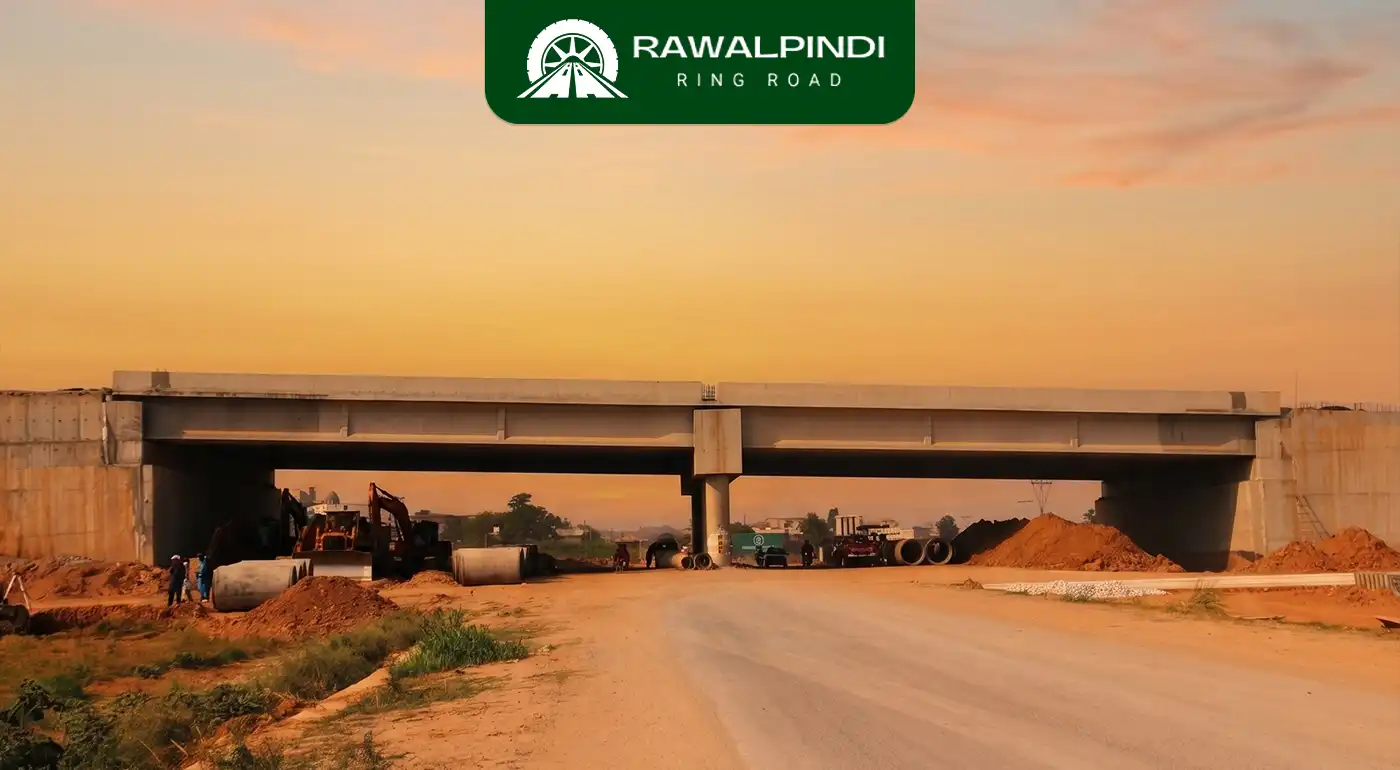
The Banth Interchange is confirmed complete as of June 2026 per RDA sources. It is designated as the primary opening point for the Ring Road’s initial public access. The FWO began construction at Banth Mor and Thalian simultaneously in April 2022 following the contract award. The project cost has reached Rs 50 billion across the full corridor, and the Banth-to-Chakri section, the four operational interchanges, reached 85% completion by mid-May 2026 with the final 15% comprising lighting, signage, horticulture, and finishing works.
Conclusion
The Banth Interchange is where the Rawalpindi Ring Road’s impact begins, and the scale of what is planned around it goes well beyond a simple road junction. From the relocation of Pirwadhai Bus Stand and 44 transport terminals to the new sabzi mandi, dry port, and cattle market, this interchange is being positioned as the commercial entry point for all of Rawalpindi’s interaction with Punjab and the national highway network. For daily commuters, it is the exit ramp off GT Road that Rawalpindi has needed for years. For freight operators, it is the start of a bypass that eventually connects to the M-2. And for the corridor between GT Road and the Potohar Plateau, it is the infrastructure anchor around which the next phase of Rawalpindi’s expansion is taking shape. Everything that happens along the Ring Road’s 38.6 kilometres starts here.